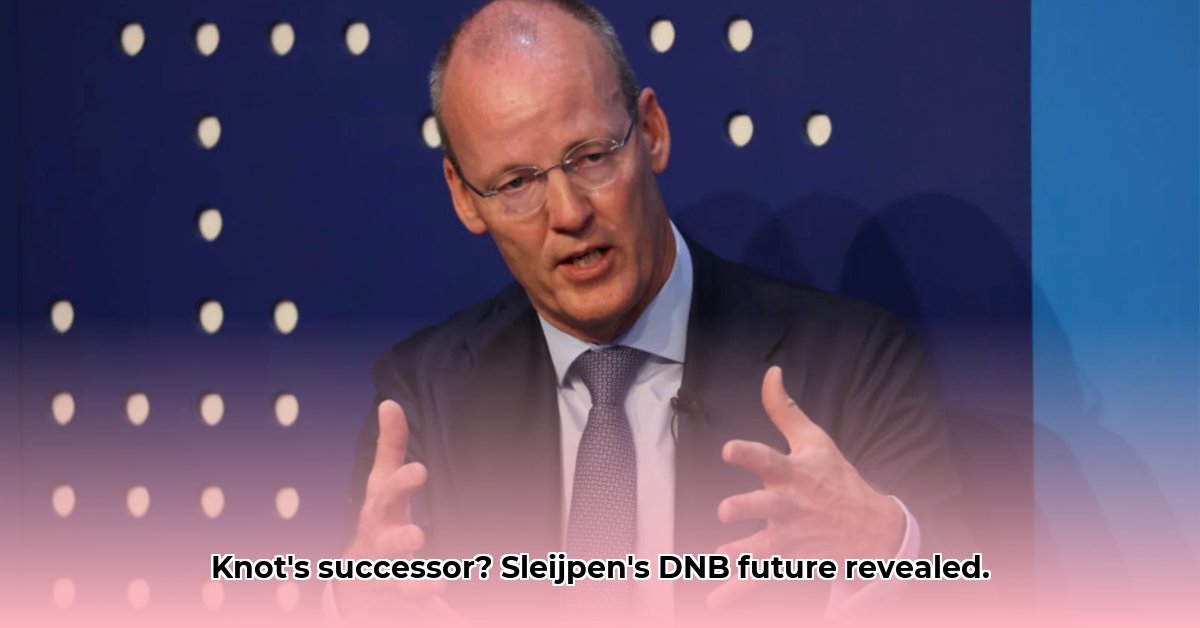
Opvolger Van Klaas Knot: A New Chapter for De Nederlandsche Bank
Olaf Sleijpen's appointment as president of De Nederlandsche Bank (DNB) marks a significant shift in Dutch monetary policy. Replacing Klaas Knot, who served a decade, Sleijpen inherits a strong institution facing both familiar and novel challenges. This article examines Sleijpen's appointment, analysing its implications for DNB's internal operations, its relationship with the Dutch government and the European Central Bank (ECB), and the future direction of Dutch monetary policy.
The Selection Process: A Blend of Expertise and Politics
The search for Knot's successor involved a rigorous process, overseen by an executive search firm and including consultations with the Dutch Ministry of Finance. While monetary expertise was paramount, political acumen and diversity considerations also played significant roles. The choice of an internal candidate—Sleijpen—differs from the 2011 appointment of Knot, an external hire. This internal appointment prioritizes familiarity with DNB's inner workings, but it may also limit the introduction of fresh perspectives, a point of debate among financial experts. This contrast highlights the ongoing tension between selecting a purely technical expert and someone with deep political understanding.
Olaf Sleijpen: A Profile
Sleijpen boasts extensive experience within DNB, demonstrating intimate knowledge of its operations and processes. His deep understanding of monetary policy is undeniable. However, questions remain regarding his readiness to navigate complex political landscapes and facilitate significant change within the institution. His strengths lie in internal expertise, promising efficient transitions and continuity; yet, his relative lack of experience outside DNB raises questions about his ability to champion bold reforms and foster international collaborations.
Analysis and Interpretation: Challenges and Opportunities
Sleijpen's leadership faces several key challenges:
- Maintaining DNB's influence within the ECB: Navigating the intricate dynamics of the ECB requires both technical expertise and strong diplomatic skills. Successfully advocating for Dutch interests within this complex framework will be a cornerstone of his success.
- Managing the relationship with the Dutch government: Balancing DNB's independence with the government's policy objectives demands astute political navigation. Issues like eurobonds will demand especially delicate handling.
- Modernising DNB's operations: Improving efficiency and innovating DNB's functioning will be essential to maintaining its competitiveness and relevance in the modern financial world. This includes modernizing internal processes, fostering a culture of innovation, and incorporating technological change.
These challenges are balanced by opportunities: Sleijpen can leverage his internal knowledge to effect changes efficiently. His appointment signals a desire for continuity and stability, potentially allowing for focused, targeted reforms, rather than broad sweeping changes.
Risk Assessment: Navigating Potential Pitfalls
Several potential risks exist:
- Government disagreements over policy: The likelihood of this is moderate, with potentially high impact. Mitigation demands clear communication and collaborative strategies.
- Challenges modernising DNB: This is also moderate in likelihood, but with medium impact. Effective mitigation involves setting clear, achievable targets, securing sufficient resources and implementing regular progress reviews.
- Damage to DNB's reputation: While unlikely, this carries very high impact. Strong governance and upholding accountability are paramount.
- Reduced influence within the ECB: This risk is considered unlikely, though its impact on DNB's effectiveness would be moderate. Active participation in ECB activities and building strong relationships are crucial mitigations.
Conclusion: A New Era for Dutch Finance?
Sleijpen's appointment presents a pivotal moment for DNB and the Dutch financial system. His deep understanding of DNB's internal workings, coupled with his policy expertise, positions him to navigate the institution effectively through a period of change. However, his ability to successfully adapt to the demands of international collaboration and political negotiation will be key factors dictating his legacy. The coming years will reveal whether his leadership fosters a new era of prosperity and stability, or leaves DNB vulnerable to the identified risks. His success hinges on deftly balancing continuity with needed reform, and maintaining both the independence of DNB and its vital role within the broader European financial landscape.
Key Pivotal Points:
- Sleijpen's internal appointment prioritises institutional continuity but potentially limits the introduction of novel ideas.
- The selection process reflected a blend of technical expertise, political savvy, and evolving diversity considerations within the Dutch financial landscape.
- Sleijpen faces challenges related to maintaining DNB's influence within the ECB and managing the relationship with the Dutch government, while modernising DNB's internal operations.